
Ford Tuition Reimbursement: How the UAW-Ford Education Program Actually Works
Many large companies offer tuition reimbursement, but Ford’s tuition reimbursement works differently from most employer programs.
Through the Education Development and Training Program (EDTP) negotiated between Ford Motor Company and the United Auto Workers (UAW), eligible employees may receive up to $8,000 per year in tuition assistance for approved education programs.
However, unlike traditional tuition reimbursement programs, Ford uses a voucher system, and the process can feel confusing if you’re seeing it for the first time.
In this guide, we’ll break down how Ford’s tuition assistance program actually works, who qualifies, and what employees need to know before enrolling in classes.

Find Companies That Offer Tuition Reimbursement
The OneSavvyScholar Tuition Reimbursement Database tracks companies that help employees pursue degrees while they work. Inside the database, you'll discover;- Tuition reimbursement amounts
- Waiting periods
- Full-time vs part-time eligibility and much more!
Overview of Ford’s Tuition Assistance Program
Ford’s education benefit is administered through the UAW-Ford Education Development and Training Program (EDTP).
The program helps eligible employees pursue:
- College degrees
- Professional certifications
- Job-related training
- Skill development courses
Depending on the type of course, employees may receive up to $8,000 per year in tuition assistance.
Unlike many employer benefits, Ford’s program is part of a union labor agreement, which is why the process includes multiple approval steps.
How Much Tuition Assistance Ford Provides:
Ford’s education benefit is divided into several categories.
Education Tuition Assistance Program (ETAP)
Employees may receive up to $8,000 per year toward approved degree programs. Eligible programs may include:
- Associate degrees
- Bachelor’s degrees
- Graduate degrees
- Certificate programs
Professional Development Assistance (PDA)
This category covers job-related training and professional development courses. The annual limit is typically up to $4,000 depending on the course type.
Books and Educational Materials
Employees may also receive up to $1,000 per year for textbooks and required materials.
Because the benefit is structured across multiple categories, employees must apply for the correct program when requesting assistance.
How Ford’s Tuition Assistance Program Works
One of the biggest differences between Ford’s program and typical employer tuition benefits is the voucher system.
Instead of paying tuition upfront and being reimbursed later, employees receive an approved tuition voucher that is submitted directly to the school.
The process generally works like this:
Step 1: Apply for Course Approval
According to the program’s official policies and procedures document, employees must apply for tuition assistance before enrolling in courses.
Step 2: Receive a Tuition Voucher
Once approved, the program issues a tuition voucher for the course.
Step 3: Submit the Voucher to the School
The employee provides the voucher to their college or training provider.
Step 4: School Bills the Program
The school sends the invoice directly to the education program for payment.
Step 5: Submit Book Reimbursement
If books or materials are required, employees may submit a separate reimbursement request.
Because approval must happen before the class begins, employees should plan ahead when registering for courses.
Important Deadlines Employees Should Know
Ford’s education benefit includes several deadlines that employees must follow.
These deadlines may include:
- Applying for the program within 45 days of the course start date
- Submitting book reimbursement requests within 90 days
- Ensuring invoices are submitted within the program’s billing window
Missing these deadlines may result in the employee becoming responsible for the tuition cost.
For this reason, many employees recommend applying for approval as early as possible.
Who Qualifies for Ford’s Tuition Assistance
Eligibility for the EDTP program generally includes:
- UAW-represented Ford employees
- Active employment during the course period
- Enrollment in an approved school or program
- Meeting the program’s application deadlines
Some courses may also require manager approval or program review depending on the category.
Employees should review the official program guidelines to confirm eligibility before enrolling.
Why Ford’s Tuition Program Feels More Complicated Than Others
Compared with many employer tuition benefits, Ford’s program can feel more complex because it is administered through a union-negotiated education program rather than a simple corporate reimbursement policy.
This means the program includes:
- Multiple education categories
- Voucher-based payments
- Structured approval processes
- Formal deadlines and documentation
| Program | Limit | What it covers |
|---|---|---|
| ETAP | up to $8,000 | Degree programs |
| PDA | up to $4,000 | Job-related training |
| PDA-EEC | up to $1,500 | enrichment courses |
| Books | up to $1,000 | textbook reimbursement |
As a working student, you have to understand what bucket your course falls into.
While the process can take extra steps, the benefit can still provide significant financial support for employees pursuing education.
Is Ford’s Tuition Assistance Worth It?
For employees planning to pursue a degree or professional training, Ford’s tuition program can significantly reduce education costs.
With up to $8,000 per year in tuition assistance, the benefit can help employees earn a degree while continuing to work.
However, employees should carefully review the application requirements and deadlines to make sure they receive approval before enrolling in classes.
What Ford’s Tuition Assistance Means for Working Students
Ford’s tuition reimbursement can be valuable for employees who want to pursue a degree while continuing to work.
With up to $8,000 per year in tuition assistance, the program can significantly reduce the cost of college over time. However, the program’s voucher system and approval process make it more structured than typical tuition reimbursement programs.
Employees who plan ahead and apply early may benefit from Ford’s education assistance, but those who expect a simple reimbursement process may find the program more complicated than other employer education benefits.
For working students considering employment opportunities, it’s important to look beyond the annual tuition amount and consider factors such as:
- How easy the program is to use
- Waiting periods before eligibility
- Whether graduate degrees are covered
- How flexible the course approval process is
These factors can make a big difference when balancing work and school.
Explore Tuition Assistance Programs from Other Companies
Ford is just one of many companies that offer education benefits to employees.
Inside the OneSavvyScholar Tuition Reimbursement Database, we break down tuition programs from companies across industries so working students can quickly see:
- Which companies help pay for college
- How much tuition reimbursement they provide
- Waiting periods and eligibility requirements
- Program rules and application steps
Explore the tuition reimbursement database to see which employers support working students.
Common Mistakes Ford Employees Make With Tuition Assistance
Many employees miss out on Ford’s education benefit because they misunderstand how the program works. Here are three common mistakes:
Paying tuition before applying
Ford’s program is not a traditional reimbursement program.
Employees are instructed not to pay tuition before requesting approval, because the program normally pays the school directly through vouchers.
Missing the application deadline
Applications must be submitted within 45 days of the course start date. If employees miss this deadline, they may become responsible for the full cost of tuition.
Taking classes that are not approved
Not every school or course qualifies for the program. Employees are encouraged to apply before registering for courses to confirm eligibility.
Final Thought on Ford’s Tuition Reimbursement
Many companies now offer education benefits to employees. Here’s how Ford’s tuition assistance compares with programs offered by companies like Starbucks, Amazon, and Home Depot.
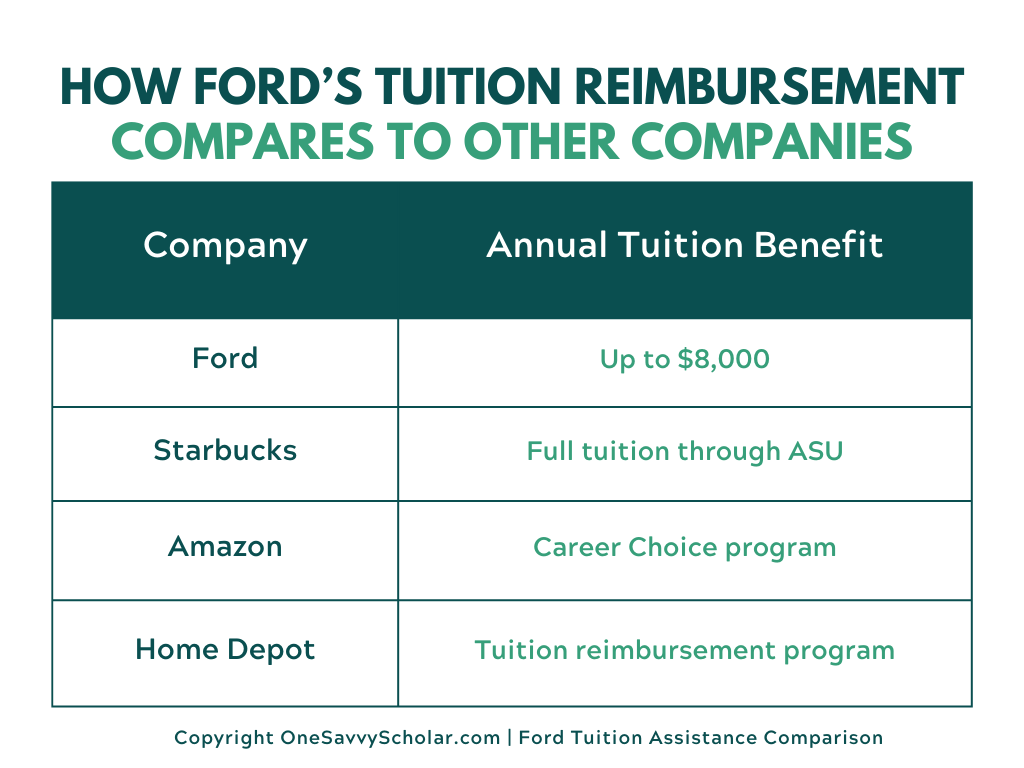
If you’re exploring the working student path, you may want to start by researching employers that offer tuition reimbursement and education assistance programs.
I created a database to make it easier to find them without digging through hundreds of websites.
Find Companies That Offer Tuition Reimbursement
The OneSavvyScholar Tuition Reimbursement Database tracks companies that help employees pursue degrees while they work. Inside the database, you'll discover;- Tuition reimbursement amounts
- Waiting periods
- Full-time vs part-time eligibility and much more!