
Working Student vs Student Employment: What’s the Difference?
Last updated on April 13th, 2026 at 06:54 am
Many students today work while earning their degrees; but not all working students are the same.
When comparing working student vs student employment, the difference goes beyond simply having a job while enrolled in school.
The conversation around working student vs student employment often gets overlooked, even though the difference can significantly impact how students pay for college and build their careers.
Some students work part-time roles for extra income, while others take a more intentional approach by choosing jobs that support their education through benefits like tuition reimbursement.
Understanding this distinction can shape how students pay for college, gain experience, and build their careers.
For students trying to reduce or avoid student loan debt, that distinction matters more than ever.
My Experience as a Working Student
Before building OneSavvyScholar, I spent eight years working while earning my degrees.
During that time, I balanced full-time employment with coursework while living and working in Long Island. Like many working students, I had to figure out how to manage work schedules, class deadlines, and long-term financial goals at the same time.
That experience changed how I think about education.
Working while in school wasn’t just about earning income; it became a strategy for reducing student loan debt, building career experience at the same time, and supporting myself since I lived on my own.
Many students believe they must choose between focusing on school or focusing on work. But my experience showed that the two can work together when approached intentionally.
What Is Student Employment?
Student employment usually refers to part-time jobs designed specifically for students.
These jobs are often flexible and scheduled around class times. Many are located on campus or through university programs such as Federal Work-Study.
Examples of student employment include:
- Library assistant
- Campus tour guide
- Dining hall worker
- Research assistant
- Administrative support in university offices
Student employment can help students earn spending money and gain early work experience. However, these roles rarely include education benefits that directly help pay tuition.
In most cases, the wages earned simply help students cover day-to-day expenses.
What Is a Working Student?
A working student is someone who intentionally combines employment and education to fund their degree while building professional experience.
Instead of only working for spending money, working students choose jobs that support their long-term education goals.
Many working students seek employers that offer:
- Tuition reimbursement programs
- Tuition assistance benefits
- Employer-sponsored degree programs
- Education partnerships with universities
These programs allow employees to earn their degrees while working, sometimes with thousands of dollars in tuition support each year.
For students who qualify, this strategy can significantly reduce the amount of student loan debt they need to take on.
However, a working student isn’t one specific type of person.
It’s not just someone fresh out of high school working part-time or someone in their early 20s trying to figure things out.
A working student can be a 22-year-old retail employee finishing their degree. It can be a 35-year-old going back to school for a career shift. It can be a 40-year-old professional pursuing a master’s degree while working full-time.
In reality, working students are more like a bag of Chex Mix.
Different pieces, different backgrounds, different stages of life; but all navigating the same challenge of balancing work and education at the same time.
That’s what makes this group so often misunderstood and ignored.
Key Differences Between Student Employment and Working Students
While both involve working while in school, the purpose and benefits are very different. Student employment focuses primarily on short-term income while working students focus on long-term education funding and career growth.
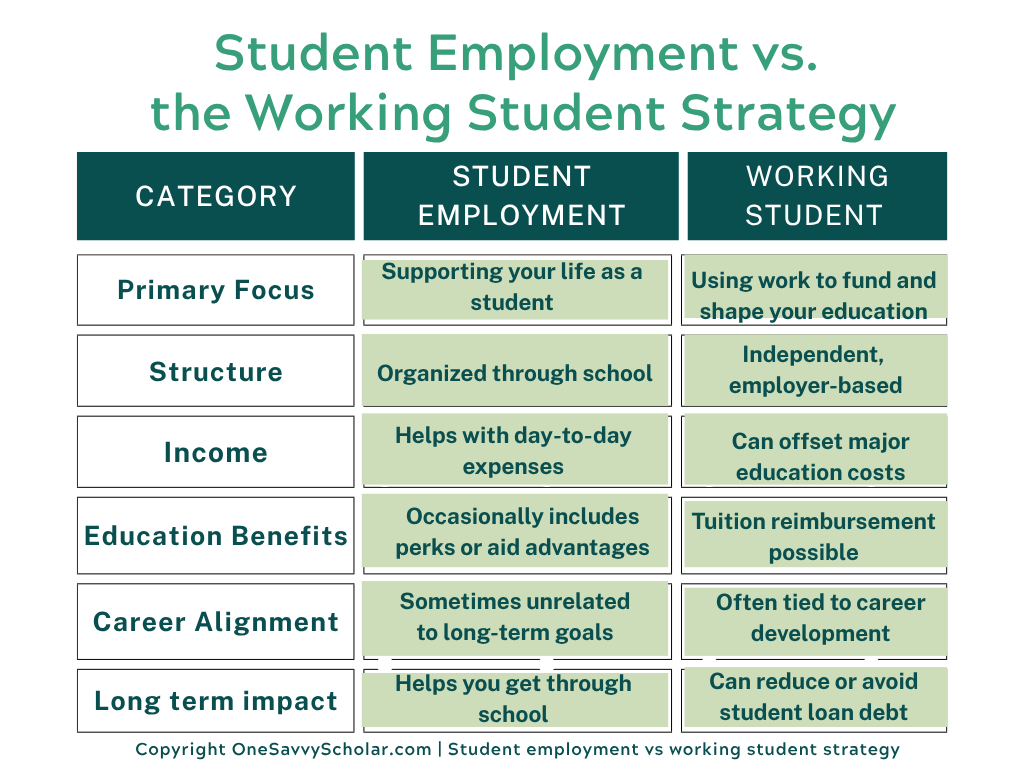
Why the Difference Between Student Employment and Working Students Matters
At first glance, student employment and working while earning a degree may seem like the same thing. Both involve balancing school and work.
But the difference matters because the long-term financial outcomes can be very different.
Many students take campus jobs simply to earn spending money. While these roles can provide flexibility and valuable experience, they usually do not contribute directly to reducing tuition costs.
Working students, on the other hand, often pursue employment that provides education benefits such as tuition reimbursement or tuition assistance. These programs can cover thousands of dollars in tuition each year.
For example, some employers offer up to $5,250 per year in tuition reimbursement, which is the maximum amount companies can provide tax-free under current U.S. tax law.
Over several years, this support can significantly reduce how much a student needs to borrow in student loans.
The difference also affects career development. Many tuition reimbursement programs encourage employees to pursue degrees related to their field, which can lead to promotions or new career opportunities.
In other words:
- Student employment helps students earn income while in school
- The working student strategy helps students fund their education while building a career
Understanding this distinction can help students make more informed decisions about where they work while earning their degrees.
Why More Students Are Choosing the Working Student Strategy
College costs have increased dramatically over the past two decades. As a result, many students are looking for alternatives to traditional student loans.
One option gaining popularity is working for companies that help pay for school.
Many employers now offer tuition benefits to attract and retain talent. These programs are especially common in industries such as:
- Retail
- Healthcare
- Logistics
- Technology
- Financial services
- Manufacturing
For working students, these benefits can provide thousands of dollars in annual tuition support.
The 5 Types of Working Students
Not every working student follows the same path. In reality, there are several different ways students combine work and education.
Understanding these paths can help students decide which strategy fits their situation best.
1. The Tuition Reimbursement Strategist
These students intentionally choose employers that offer tuition reimbursement benefits.
They may start in entry-level roles but stay with the company long enough to take advantage of education benefits that help fund their degrees.
This strategy is common in companies that offer $3,000–$5,250 per year in tuition assistance.
2. The Career-Advancing Employee
Some students already work full-time and return to school to advance their careers. However, their employer may offer tuition support for degrees related to their job, such as:
- Business
- Accounting
- Healthcare administration
- Information technology
In many cases, completing the degree opens doors to promotions and higher salaries.
3. The Degree-While-Working Builder
These students enroll in part-time or online programs while maintaining steady employment.
Rather than finishing school quickly, they focus on balancing work experience with education over time.
This path often takes longer, but it allows students to avoid large amounts of debt.
4. The Working Parent Student
Some working students are also parents supporting families.
For these students, leaving the workforce to attend school full-time is often unrealistic. Instead, they pursue flexible programs while continuing to work.
Employer tuition benefits can make continuing education more financially possible.
5. The Strategic Career Switcher
Some students work while earning degrees in entirely new career fields. For example, someone working in retail may pursue a degree in:
- Computer science
- Healthcare
- Finance
- Engineering
Employer education programs can help make these transitions more affordable.
Common Myths About Working While in College
Many students assume that working while earning a degree is either impossible or harmful to their academic progress. But several common misconceptions often prevent students from exploring options that could help reduce education costs.
Here are a few myths worth addressing.
Myth #1: Working While in College Means You’re Falling Behind
Some students feel pressure to finish their degrees as quickly as possible. When they take longer because they are working, they may feel like they are falling behind.
In reality, many working students are building professional experience while earning their degrees, which can be a significant advantage after graduation.
Employers often value candidates who already have workplace experience.
Myth #2: Only Campus Jobs Work for Students
Campus jobs are often designed to accommodate class schedules, but they are not the only option available.
Many companies offer flexible schedules for employees who are also students. Some even provide tuition reimbursement or education assistance programs.
These benefits can help students fund their education while gaining real-world experience.
Myth #3: Working Will Automatically Hurt Academic Performance
Balancing work and school can be challenging, but many students successfully manage both responsibilities.
Part-time schedules, evening classes, and online degree programs have made it easier than ever for students to continue working while completing coursework.
For some students, working can even improve time management and discipline.
Myth #4: Tuition Reimbursement Is Rare
Many students assume tuition reimbursement programs are only offered by large corporations or highly specialized companies.
In reality, thousands of employers across industries offer education benefits, including companies in: retail, logistics, aerospace, healthcare, biotechnology, restaurant, manufacturing, financial services and much more!
These programs are more common than many students realize.
Myth #5: You Must Choose Between Work and School
One of the biggest misconceptions is that students must choose between working or focusing entirely on their education.
The working student strategy shows that the two can often work together.
With the right employer and the right academic program, students can earn income, gain experience, and progress toward their degrees at the same time.
How to Find Companies That Help Pay for Your Degree
Not all employers offer tuition benefits, but many do.
Students interested in the working student strategy should research companies that provide:
- Tuition reimbursement programs
- Employer education partnerships
- Education assistance benefits
These programs can significantly reduce education costs while allowing students to gain valuable work experience.
Final Thoughts
Working while in school has become increasingly common. But there is a big difference between student employment and the working student strategy.
Student employment helps students earn income.
Working strategically at companies that support education can help students earn their degrees while reducing student loan debt.
For students willing to plan carefully, combining work and education can become a powerful way to build both a career and a degree at the same time
At OneSavvyScholar, we focus on helping working students identify employers that support education through tuition reimbursement and other education benefits.
If you’re exploring the working student path, you may want to start by researching employers that offer tuition reimbursement and education assistance programs.
I created a database to make it easier to find them without digging through hundreds of websites.

Find Companies That Offer Tuition Reimbursement
The OneSavvyScholar Tuition Reimbursement Database tracks companies that help employees pursue degrees while they work. Inside the database, you'll discover;- Tuition reimbursement amounts
- Waiting periods
- Full-time vs part-time eligibility and much more!